Blog Archive

When Traditional Mental Health Therapy Doesn't Work...

Mental health therapy and I aren't the closest of friends. If I'm being completely honest, we're not even acquaintances.  

Throughout my many years of life I have seen mental health therapy manipulated to benefit those in power.

I have experienced being on the receiving end of services where the mental health professional caused more harm than good.

I have worked with many mental health professionals who feel that a child's behaviors is the fault of the parents, and therefore the parents need to be "fixed."

And when it's come to Sunshine, I have worked with so many mental health professionals who think they know how to help, don't listen to our experiences as parents or experiences we've had with other professionals, and then when their way doesn't work, they give up and Sunshine gets burned again.

It can be extremely frustrating when traditional mental health therapy doesn't work, especially after hoping it would so many times.


When Traditional Mental Health Therapy Doesn't Work...


Therapy for those Who Have Experienced Trauma


It's been a little over a year since I started working with a therapist who specializes in trauma for myself.

Taking that leap of faith, after so many negative experiences, was HARD. If you'd like to know just how difficult it was, I wrote about my first session HERE.

Traditional mental health therapy models were definitely not a great fit for me, after so many prior experiences that were negative.

I was so thankful that the therapist I met with was well versed in many modalities and was willing to put the hard work and effort into finding the perfect fit for me.

She recommended we start with the book, The Body Keeps the Score. This book introduces many types of therapies that may work for people who have experienced trauma.

Originally I was hoping to try EMDR or something similar, but after reading the book mentioned above, I found IFS or Internal Family Systems model to be the most intriguing.

Fortunately for me, my therapist was trained in the model and more than willing to try it out!


What is IFS?


Internal Family Systems or IFS is a therapy that emphasizes the idea that we all have multiple parts. 

Each part plays a role in how we respond to the world around us. 

Parts develop as we experience trauma, as ways to survive and cope with the situations we are placed in.

Some of these parts are protective. 

Others like to act as managers. 

We have parts that have been exiled.  

Not all parts get along.

And when the parts don't work correctly, it's as if a fire has broken out, and firefighters are called in to respond.

IFS focuses on identifying and working with parts to help an individual understand their own trauma response and how it works.

From there, the individual self works with the parts to develop a plan for the future that is more balanced and healthy, with all parts better understanding their role in the present, which may differ from the past.

Eventually the exiles are unburdened and the self is able to take the lead, with the parts understanding and loving their present roles in helping the individual remain as healthy as possible.


Thinking of One's Self in Parts


IFS may seem odd at first, but if you pause for a moment and think about how you talk about your feelings, it makes so much sense.

How often do you say,

"Well, part of me feels this way, while another part of me feels this way."

IFS just takes things further, by naming and identifying parts and working with them to help you be the best you can be, while fully respecting each and every part.

I can say for me, understanding all of my parts has been life changing.

Giving each part a name has provided such comfort.

So much power comes from understanding all of my parts and how they work.

I am a healthier and happier person.


IFS for the Individual


Due to my struggles with trusting mental health therapists and any modality, once I showed interest in IFS, my therapist recommended reading Internal Family Systems Therapy by Richard C. Schwartz. 

This book is not light reading, but actually a text used to train therapists how to do IFS.

Internal Family Systems Therapy


Each week I'd read a little bit and bring questions to therapy. 

At the same time, each session, my therapist would help me with my individual IFS work.

Words can not express how amazing this journey has been and how much it has helped me.

I highly recommend it for anyone who's looking for a new way to work through trauma.  I will be continuing for as long as my therapist welcomes me back!

Internal Family Systems Manual


Now that I've finished the text one time through, I have slowly started to work through the corresponding workbook, Internal Families Systems Skills Training Manual as I read the original text a second time through.


Who can benefit from IFS?


IFS was can and has been used in a variety of cases ranging from trauma to addictions, to personality disorders.

As much as some of my parts continue to try to convince me that I am wrong, bad, and not okay, my therapist, and many before her, have stated that I don't suffer from an anxiety disorder, depression, PTSD, ADHD, or anything else. 

My anxiety is not severe or inhibiting.

I am not a depressed person.

Yes, I have experienced trauma, but it can't be considered POST traumatic stress disorder, if I'm still going through it, which I am, in regards to Sunshine's situation.

I do not have ADHD, even though my trauma response feels like ADHD on steroids. But unlike ADHD, it comes with a fog that takes over.

I don't have a personality disorder.

I don't suffer from addictions.

Yet, IFS is perfect for me because it helps me work through my body's response to trauma from the past and present, and fears of what may happen in the future.


IFS for Couples


Trauma doesn't just affect individuals in family. It affects the marriage and family dynamics. 

My husband and I have attempted couples therapy for the last three months, without using the IFS model. 

It has not gone well and is extremely triggering. 

Internal Family Systems Couple Therapy


Due to these struggles with traditional couples therapy approaches, and our love of IFS, we've decided to switch modalities and use the Internal Family Systems Couple Therapy Skills Manual.

My therapist, trained in IFS, has agreed to help us with anything we may have questions about.


IFS for Children


One of the greatest benefits of IFS therapy and training has been how I've been able to apply it to situations at home with my kids, especially Princess.

She is very quick to view herself as ALL bad, when in fact, it is only parts of her that feel that way.

Understanding her many parts has been eye opening and empowering for her.

When it comes to tense situations between us, instead of conversations becoming heated, all I have to do is ask Princess, what part is in charge right now, and she calms right down. 

The part is then free to express feelings without judgement, and we work to help her part(s) feel safe.

Princess has gone as far as drawing images of her parts, what they look like, and how they work.

She absolutely loves this modality. Unlike others we've tried, this one is actually working.
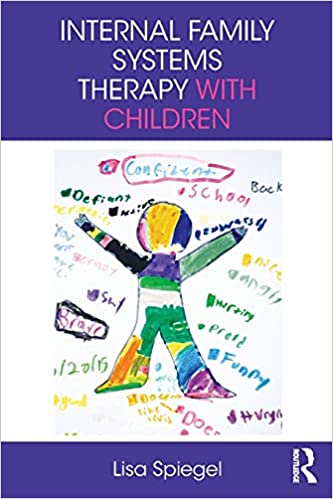

Internal Family Systems Therapy for Children


I am super excited to start using the Internal Family Systems Therapy with Children book to help guide Princess' progress.

IFS has not been offered at any of Sunshine's residential placements, but if it was, I believe it would also help her.


Try It!


My husband was laughing at me today as I expressed my love for IFS. He knows more than anyone how much I dislike mental health therapy, especially many of the traditional modalities. 

He worked as a mental health therapist and has tried for years to persuade me of the benefits of mental health therapy, despite what I've experienced in the past, and what our family has endured over the years.

Today he declared victory, even though I told him, I was only in support of IFS. 

If you're struggling with traditional mental health therapy and feel it's not working, research local IFS trained therapists in your area and try it. 

IFS is a complicated approach, so I can't emphasize enough how important is to work with a therapist  who has training and experience with it. 

It may just change your life for the better!

To receive more mental health resources and support from us, be sure to subscribe to our FREE newsletter.


Click HERE to Subscribe to our FREE Newsletter


If you enjoyed this post, you may also enjoy the resources below.

  The Realities of Reactive Attachment Disorder and Mental Health Therapy Internal Family Systems: A Child's Parts Reactive Attachment Disorder Fits: Did I Do Something Wrong? To Be a Mother of a Young Child with Reactive Attachment Disorder Our Pediatric Mental Health Crisis My Child Wants to Kill Herself, Now What? Why Self-Care is So Dang Hard for Parents Raising Kids with Trauma Holidays and PTSD:  A Parent's Guide to Survival

Read More »

Reactive Attachment Disorder and Food Struggles

 “We need to talk about Sunshine’s eating habits. She’s refusing multiple meals a day.”

The clinical director of Sunshine’s RTC continued explaining everything that had been tried.

This is the third RTC that Sunshine has been placed in due to behaviors related to Reactive Attachment Disorder, and other emotional and developmental disabilities.

They had given Sunshine food choices at this RTC.

They had offered to have her help prep her meals.

They made her favorite foods.

Still the problem was worsening.

A list was read out loud of all the food that Sunshine had refused over the past two weeks. It included hamburgers, French fries, and potato chips, all of which are her favorites.

No information that the clinical director shared was new.

This is what life has always been like with Sunshine due to Reactive Attachment Disorder and Food Struggles.


Reactive Attachment Disorder and Food Struggles


Reactive Attachment  Disorder and Food Struggles


The History


Sunshine has a LONG history with food, and it’s not a good one.

Throughout the years we’ve dealt with food refusal, food gorging, vomiting, gagging, stealing food, and so much more.

This is all completely normal with a child who has Reactive Attachment Disorder.

This has been on top of reflux, food allergies, and other special dietary needs.

Sunshine has had a barium study. She’s been to a swallowing specialist. An OT has worked with her.

We have tried so many different methods to empower Sunshine at mealtime. 


  • Use a Montessori weaning table
  • Teach practical life skills related to food preparation
  • Let Sunshine prepare her own food to the ability that she’s able
  • Let Sunshine meal plan
  • Take Sunshine grocery shopping to ensure we have foods that she loves
  • Provide choices to choose from
  • Improve sensory experiences related to food

Still, Sunshine refused to eat on a regular basis.

Mealtime became a battle ground.

Often the issues started even before a meal was prepared, especially at dinner time. If Sunshine didn’t like what we were having all sorts of behaviors would start.

The screaming would come first, then would come the physical aggression.

When my husband wasn’t home, I’d always need to make sure the refrigerator was stocked full of grab and go foods for my other children to prepare on their own. Sunshine’s outbursts and aggressions could last hours, to the point that I could not prepare a meal.


The Doctor's Orders


I spoke with Sunshine’s developmental pediatrician about these struggles early on. 

As a mother, I felt like the most horrible person on earth. 

Nothing I tried would help with the mealtime drama, which was affecting Sunshine’s health.

The developmental pediatrician was kind yet blunt.

If she was refusing to eat, then I needed to do what was necessary to make sure she ate. 

If that included a stand off until she conceded, then that’s what needed to happen.

If she would not feed herself, then I was to feed her.

Refusing to eat was not an option.

So that’s what we did.


The Nightmare


We continued to do all the things mentioned above AND…

At each meal, I set the rule that Sunshine had to eat however many bites of food she was in years of age. When Sunshine was five years old, she needed to take five bites.

If she decided to refuse and throw a fit, I’d wait until the fit was over, and we’d start again.

If Sunshine decided to spit her food out, the count started over.

If Sunshine became aggressive, I’d wait it out and we’d go at it again.

It was a nightmare.

I felt like a monster.

This was not the mother I wanted to be.

But, year after year, this proved to be the only way to ensure that Sunshine would eat.

You see, Sunshine has absolutely no concept of when she’s full or hungry. This dates back to trauma she experienced during the first six months of her life (before she came to us).

Food trauma is real.


Validation


As I shared with the clinical director what had worked at home all those years, frightened out of my mind to be judged as being that parent, the clinical director surprised me.

“Okay. We’ll do it.”

I was speechless.

“Are you sure? It’s going to result in so many more aggressions.”

She was sure.

Sunshine’s refusal to eat has become that dangerous.

Part of me was frustrated.

After six months of working with professionals, my advice is the best idea they have.

Yet, if my advice is the best option they have, that means that no matter how horrible it felt forcing Sunshine to eat all of those years, it was the right thing to do.

If Sunshine is refusing to eat even more there than she was at home, that meant that the whole mess wasn’t my fault.

I’m not really great at accepting that things aren’t my fault.

I do not have confidence in my parenting abilities after how horrible experiences have felt.

So for good measure I reminded the clinical director of a few other things.

  • Sunshine’s GABA supplement should not be taken with food, or else it causes her tummy to be upset.
  • A side effect of one of Sunshine’s meds is constipation. If she’s constipated, she’s not going to eat much.
  • Sunshine had COVID-19 a month ago and it may have changed her taste buds.

But ultimately, all of us agreed that it seems all of this comes down to control.

Reactive Attachment Disorder goes far beyond the challenges of parenting a picky eater or one with sensory struggles.

Why I Share


I’m sharing this experience because I know there are other caregivers out there struggling with food issues related to Reactive Attachment Disorder. They are real. You are not alone.

Documentation is so important in these cases.

Keep a food journal.

Write down behaviors.

Try everything and anything that professionals suggest. 

Document if it works and the consistency in which it works.

Talk to your child’s pediatrician and other specialists.

You need a team.

You need support.

Battles as severe as Sunshine’s regarding food are not normal. Seek help.

You are not a bad caregiver for doing so.

This is not your fault.

For those looking for more support and resources related to Reactive Attachment Disorder be sure to subscribe to our FREE newsletter.


If you enjoyed this post, you may enjoy the resources below.

What Is Reactive Attachment Disorder A Minimalist Montessori Home Tour: The Kitchen How to Discipline a Child with Reactive Attachment Disorder Food Issues When Food is Your Child's Enemy Day to Day Life Parenting A Child with Reactive Attachment Disorder
Read More »

Valentine's Day Noun Activities for Preschoolers with Free Printables

 I am so excited about these new Montessori-inspired Valentine's Day Noun Activities for Preschoolers. They even come with a new free printable.

It's my plan to bring them along with us to Sunshine's next visit for her to enjoy during learning time. (We try to keep our daily schedule as close to home as possible when we visit to practice each and every part of the day.)

Sunshine absolutely loves holidays. When I combine holidays with learning, she's sure to enjoy herself and learn so much more. It also helps that there are a lot of hands on activities, which always keeps her busy.


Montessori-inspired Valentine's Day Noun Activities for Preschoolers with Free Printables

In the Montessori albums, nouns are introduced in the elementary classroom.

I'm here to say, it's perfectly okay and sometimes highly encouraged to introduce noun concepts in the Montessori preschool classrooms.

I create noun activities for preschool children, for this very reason.

The goal is to follow the child. 

If a student is showing signs of interest in learning about grammar early, go for it!

As a preschooler, Bulldozer LOVED shapes and colors. He was drawn to the Montessori Grammar Symbols because of this. Though he couldn't read or write at the time, he learned about grammar, because he loved it so much.

We continued with grammar lessons in elementary when he was ready for the next level, but so much of his knowledge is based on all of those preschool lessons and activities.

Today I'm excited to show you four activities that may work for Montessori preschoolers in your life!


Valentine's Day Noun Activities for Preschoolers


N is for Noun


N is for Noun

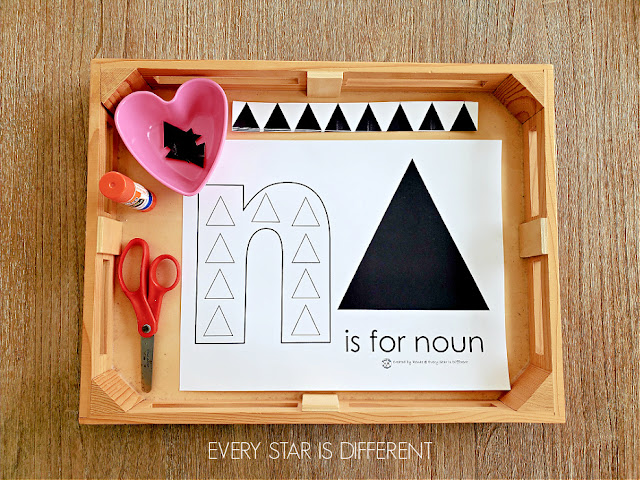
Grammar lessons can be combined with so many other learning concepts. Here I've created a first letter sound "do-a-dot" page that focuses on the Montessori Grammar Symbol for nouns. This activity can also include cutting and gluing.


Sunshine will cut the triangles and glue them onto the letter n, in each of the triangles there. 


As she works, and once finished, we will review that a black pyramid/triangle stands for a noun, which is a person, place, thing, or idea in a sentence.


Source: I created this printable as part of Valentine's Day Nouns Printable Pack.


Valentine's Day Nouns: People, Places & Things


Valentine's Day Nouns: People, Places & Things

In this activity Sunshine will learn and understand that a noun is a person, place, or thing. I've included the Montessori Grammar Symbol for nouns on the tray as a visual to remember what a noun is.


We will go through the pictures together to identify what each one is. Once she feels confident knowing the name for each image, she will sort them under the "people," "places," and "things" cards provided.


I absolutely love this activity and the cards included. There are so many fabulous people to discuss when it comes to Valentine's Day including a chocolatier, jeweler, and baker. The "places" and "things" cards are great as well.


Source: I created this printable as part of Valentine's Day Nouns Printable Pack.

I Spy Nouns!


I Spy Nouns!


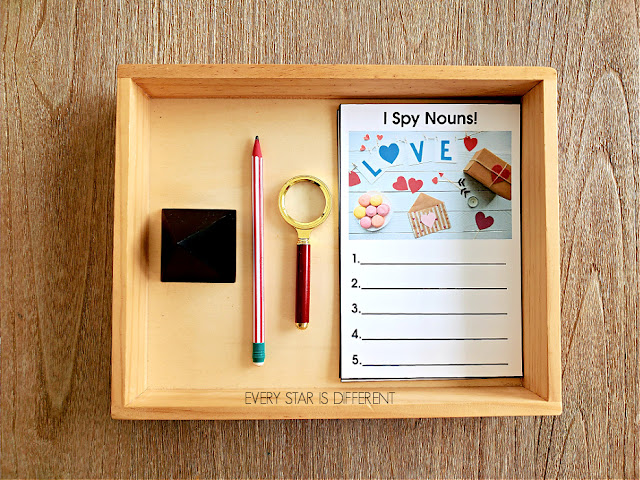
Once the realization comes that nouns are people, places and things, it can be quite fun to play "I Spy" with nouns. How many nouns can you find?

In this activity Sunshine will use her favorite magnifying glass to look for nouns in the picture cards provided. She will be working with a parent or sibling, so she can share her nouns verbally.

If she's up for it, I'm going to invite her to use the "big kid" version of this activity where she is able to write what she finds on the lines provided.

I Spy Nouns! Writing Activity

This is not a spelling activity, so she can do her best to write words without worrying if they're spelled wrong. If she wants help spelling, she can always ask for it.


You'll notice I also included a noun pyramid in this activity to reinforce the Montessori Grammar Symbol.


Source: I created this printable as part of Valentine's Day Nouns Printable Pack.

Valentine's Day Nouns


Valentine's Day Nouns

This is a super fun activity to reinforce that nouns are things. Sunshine will match up the objects with the free noun word strips provided.

What I love about this activity is that all of the noun word strips have to do with objects you may see at a Valentine's Day Party. All objects are $1 or less, found at Walmart or our local dollar store.


For those interested in receiving more Valentine's Day and Montessori grammar activity ideas and resources for preschoolers and elementary students, be sure to subscribe to our FREE newsletter.


If you enjoyed this post, you may also enjoy the following resources.


Valentine's Day Singular and Plural Nouns Writing Strips Valentine's Day Practical Life and Sensorial Activities Montessori-inspired Pink Activities Montessori-inspired Red Activities Valentine's Day in Paris Valentine's Day Activities for Tots 
Read More »

FREE Valentine's Day Singular and Plural Nouns Writing Strips

Valentine's Day is such a great holiday for studying language concepts including grammar. Nouns are especially fun to learn about. There are some fantastic Valentine's Day related nouns!

Everyone learns differently. 

Some enjoy pictures. 

Others enjoy reading. 

Then there are those who learn through writing.

I have two girls who absolutely love writing. 

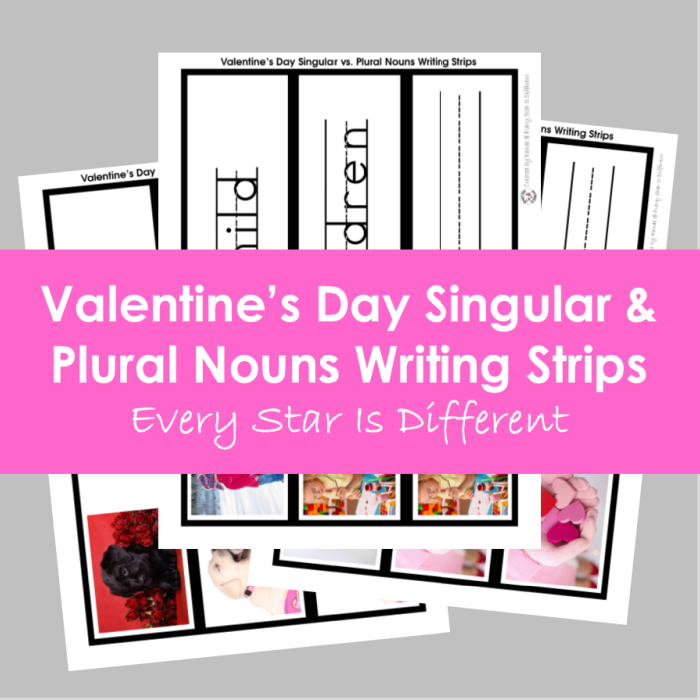
It's for these reasons that I've created the FREE Valentine's Day Singular and Plural Nouns Writing Strips.

Valentine's Day Singular and Plural Nouns Writing Strips

Three writing strips are included for every singular and plural noun match up:
  • Singular Noun Writing Strip
  • Plural Noun Writing Strip
  • Fill-in-the Blank Plural Noun Writing Strip

How to Use the FREE Valentine's Day Singular and Plural Nouns Writing Strips


There are multiple ways that these writing strips can be used.

1. A student may choose to match up the singular and plural writing strips. If you have a student with a vision impairment, these writing strips may be a better option than traditional nomenclature sized matching cards.

2. A student may be presented with singular noun writing strips and blank plural noun writing strips with the expectation of writing the plural version of the noun.  Answers can be checked using the plural nouns writing strips.

3. A student may be presented with only blank plural noun writing strips and asked to write the plural noun that matches the picture. Answers can be checked using the plural noun writing strips.


To obtain your free Valentine's Day Singular and Plural Nouns Writing Strips, click on the link at the bottom of this post.

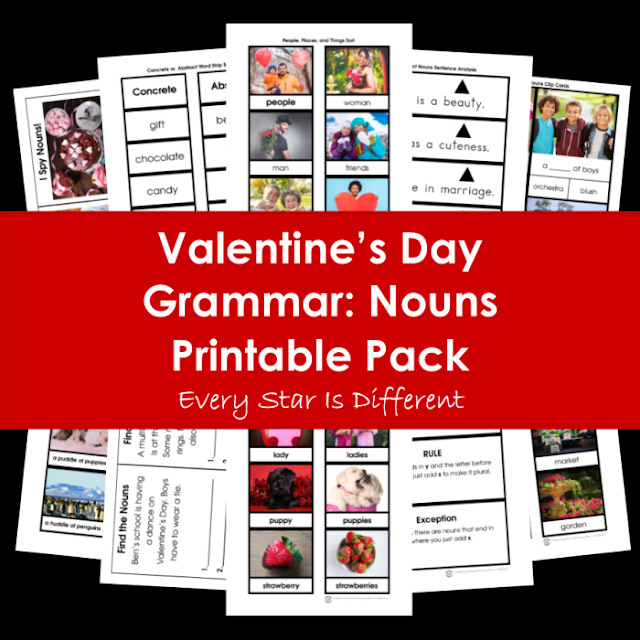
Valentine's Day Grammar: Nouns Printable Pack

Valentine's Day Grammar: Nouns Printable Pack


The FREE Valentine's Day Singular and Plural Nouns Writing Strips are designed to be used with the Valentine's Day Grammar: Nouns Printable Pack.

They match the singular vs. plural noun nomenclature cards included in the printable pack.

This is such a fabulous language resource that can provide years of study for homeschoolers and such a variety of grammar activities on the shelves in Montessori classrooms! 

We hope you enjoy it as much as we do!


For those looking for more Valentine's Day and Montessori grammar resources, be sure to subscribe to our FREE newsletter where you will receive updates about our most recent activities and free printables.


If you enjoyed this post, you may also enjoy the resources below.


Valentine's Day Practical Life and Sensorial Activities Montessori-inspired Pink Activities Montessori-inspired Red Activities Valentine's Day in Paris Valentine's Day Activities for Tots Valentine's Day

Read More »

Penny Activities for Kids

In a world where we use debit cards and gift cards most of the time, we often forget the importance of teaching children about money. 

The thing is, if any of our children decide to have a job where they use a cash register, money skills are needed. Those who run their own business or become bankers are also working with money all of the time. There are many other jobs that require a solid base knowledge of money!

Learning about money teaches so many mathematical skills that children may not have interest in or understand without the use of money. So even if you still feel learning about money isn't that important, it may not be about the money at all!

Still, teaching about money can feel extremely overwhelming. There are SO MANY STEPS! 

This is why I've created the Montessori-inspired Coins: Pennies Printable Pack.  It starts with the most basic concepts and progresses from there. No step is skipped to ensure every child develops a solid understanding of every concept.(Intermediate and Advanced Money Bundles will be coming in the future!)

Here is a look at all of the fabulous penny activities for kids included!


Penny Activities for Kids

Learning about money initiates such excitement in children. It's like treasure to them. They feel so grown up as they work with money, no matter how little the amount is.

Money is used in so many play scenarios. I remember playing store with my sisters growing up on a regular basis. Sunshine has forever wanted a cash register! 

There wasn't a time that I wasn't trying to save every coin I had for something special as a child. Now, each of my children have piggy banks in their room. They do the same thing.

Before family vacations my mother would break open the piggy bank full of coins she'd collected doing laundry. We'd all sit around the table and count coins until there were no more.  That was our spending money for our trip.


U.S. Coins: Pennies Printable Pack

Montessori-inspired U.S. Coins: Pennies Printable Pack


All activities in this post are from the Montessori-inspired U.S. Coins: Pennies Printable Pack. This pack includes 108 pages of printables that help children master using the penny in every situation. 


Penny Activities for Kids


Learning about money, even the penny, starts with identification and language skills. What does a penny look like? What is it called? How do you write the name?  


Let's take a look at all that's included!


Penny Writing Strips


Penny Writing Strips

There are some kids that absolutely LOVE to write. To attract those children to money activities, I have included a set of writing strips. Besides penny writing strips, there are also ones that say one cent, and so much more!


P is for Penny Do-a-dot Page


P is for Penny Activity


For those that struggle to write and are still working on developing fine motor skills strong enough to write, there are beautiful do-a-dot pages included.  Both uppercase and lowercase options are available, as well as the front and back of the penny. The dot sizes are created to match the size of a penny.


Penny vs. Not a Penny


Penny vs. Not a Penny Sort


Once a child feels confident in knowing what a penny is, this sorting activity can be introduced to challenge those skills. Cards in the green container include multiple coins to sort into two columns: penny and not a penny.


Which Coin is the Same?


Find the Coin that's the Same


To further challenge identification skills, kids can enjoy this activity. Which coin is the same as the one on the far left? Once identified the kids will place a penny on it.


This activity can be tricky as it includes coins that look similar from other countries. I grew up on the Canadian border. Canadian pennies were constantly mixed in with American ones.  Lol.


Counting with Pennies


Counting with Pennies

This activity was created to introduce counting with pennies and relating it back to counting in general. Each card includes a number and then the money amount associated with that number while working with pennies. 

The object of the activity is to count out the number of pennies specified and place them in order in the boxes. Boxes were designed to fit each and every penny.


Counting Pennies Nomenclature Cards


Counting Pennies Nomenclature Cards

Once a child knows how to count pennies and understands how to read cents or dollar signs with decimals, this activity provides even more practice.

These nomenclature cards can be used in a variety of ways, depending on the needs of your child. The pennies on the cards are life size, so a child can place real pennies over top of them while counting to keep their place.


Counting Pennies Clip Cards


Counting Pennies Clip Cards

These cards are designed just like the Counting Pennies Nomenclature Cards, but with answer choices at the bottom. The nomenclature cards are a great control for this activity if needed. The child counts the coins and then places a penny on the answer at the bottom.


Money and Decimals Penny Clip Cards


Money and Decimals Penny Counting Clip Cards

At some point, teaching decimals when learning about money is necessary. This activity helps with that concept. There is a beautiful money and decimals control provided, as well as a second set of clip cards focusing on decimal placement.

Hundred Board Using Pennies


Hundred Board Using Pennies

For the ultimate counting activity, this hundred board is provided. It's a great way to practice counting to 100 with pennies and then teach that 100 pennies is equal to a dollar. Pennies do fit in each of the boxes.

Adding with Pennies Clip Cards


Adding with Pennies Clip Cards

Counting pennies is one thing, but learning to add with them is a completely different skill. These cards are designed to help with that.

Sunshine absolutely loved this activity. She chose to use the pennies provided, laying them out on the table, exactly the way they looked on the card and then added them up. Your child may choose to do things differently.  Once Sunshine had decided on an answer, she used the pennies to mark her card.


Subtracting with Pennies Clip Cards


Subtracting with Pennies Clip Cards


I just love this subtraction activity! The child reads the problem and then covers the coins subtracted with the white glass beads to reveal the answer. The answer is then marked using a penny.


Multiplying Pennies Clip Cards


Multiplying with Pennies Clip Cards

This activity is a basic multiplication clip card, but uses pennies for counters. The child uses pennies as counters to solve the problem and then marks answers using the green glass beads.

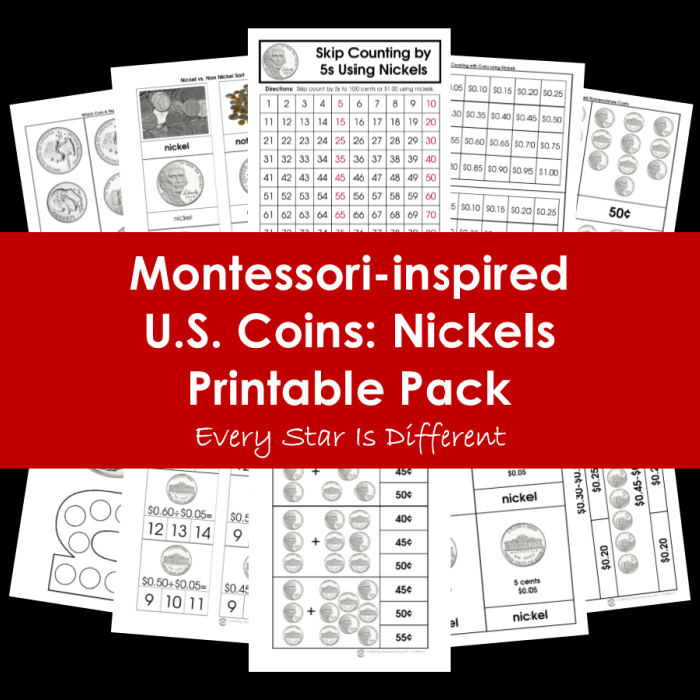
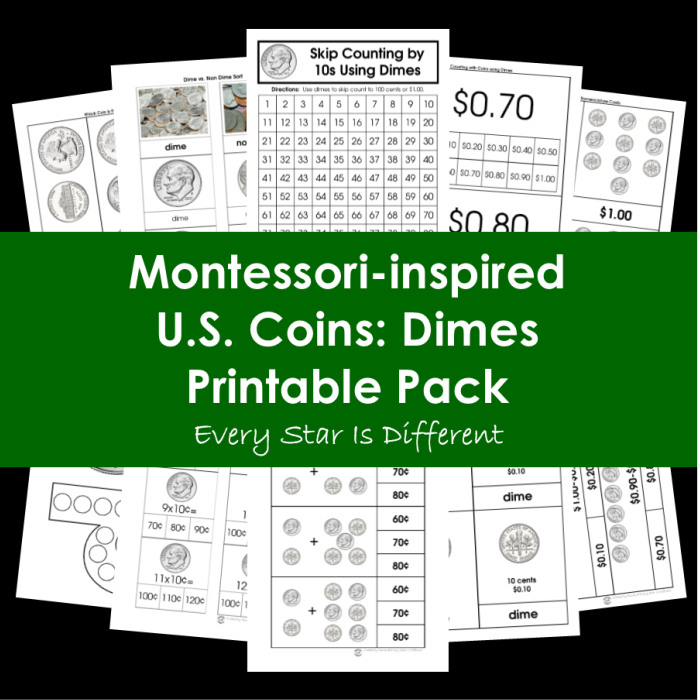
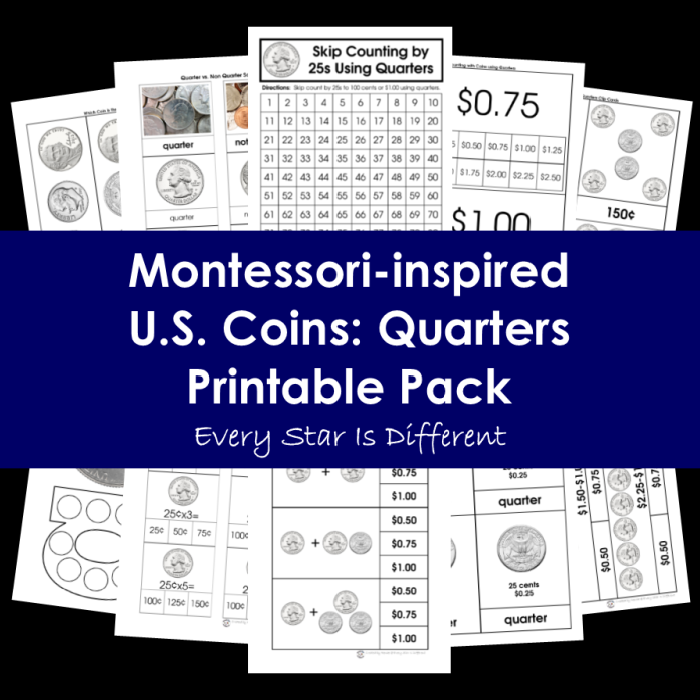
In printable packs that include the nickel, dime, and quarter, money values using cents and dollar signs are used to provide more challenge with the activity.


Dividing Pennies Clip Cards


Penny Activities for Kids

Like the multiplication cards, the division cards are created simply to introduce division concepts using pennies as counters.

In the nickel, dime, and quarter printable packs, money values are added to this activity to provide more of a challenge.


And there you have it! 


There are so many wonderful resources in the U.S. Coins: Pennies Printable Pack


For those looking for more Montessori and money resources and activities for kids be sure to subscribe to our FREE newsletter.


If you enjoyed this post, you may also enjoy the resources below.

U.S. Pennies Printable Pack U.S. Nickels Printable Pack U.S. Dimes Printable Pack U.S. Quarters Printable Pack Flowers Unit with Free Printables All American Summer Unit with Free Printables
Read More »