Blog Archive

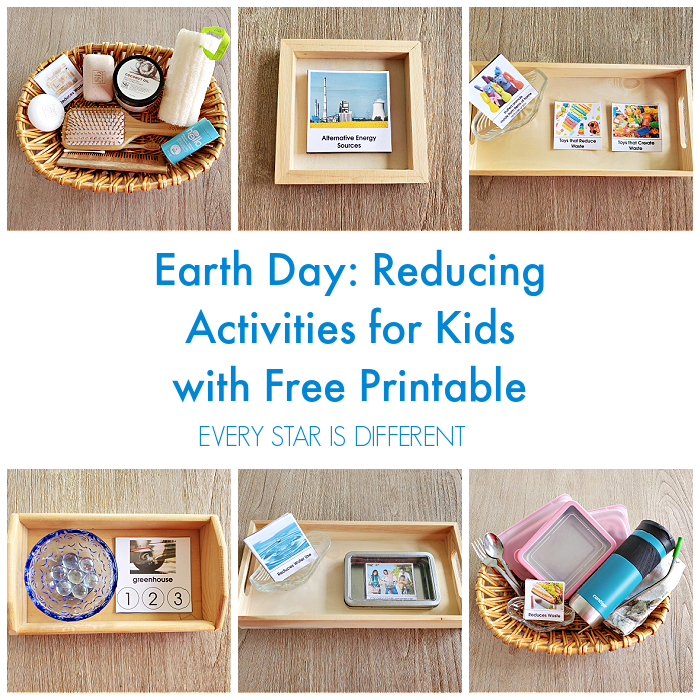
Earth Day: Reducing Activities for Kids with Free Printables

Each year everyone in the family looks forward to celebrating Earth Day and decides and implements one new way our family can help our planet.

Our Earth Day: Reducing Activities for Kids with Free Printables have been a great way to introduce all of the ways to reduce, providing the kids with options on how they will contribute in helping our planet.

What I love most about these activities and printables is that they are so kid friendly and include beautiful true-to-life images.

If you're looking for ways to teach children how to reduce in your Montessori preschool or elementary classroom, this is for you!

And remember reducing isn't just something we learn about and do on Earth Day. These activities and printables can be used any time of year! They work so well as part of your science studies.

Earth Day Reducing Activities for Kids with Free Printable

Earth Day: Reducing Activities for Kids with Free Printables


Reducing Do-a-dot Pages


W is for Water Do-a-dot Page


There are so many ways to help our planet by reducing. These do-a-dot pages introduce each concept in a simple way for kids to understand.


This particular do-a-dot page introduces the concept of reducing water use. 


Kids place the blue glass beads on the dots to represent water droplets. One could also add tweezers to the activity for an extra challenge.


Source: The printable for this activity is part of our Earth Day: Reducing Printable Pack.


Reducing Syllable Counting Cards


Reducing Syllable Counting Cards


Just like the do-a-dot pages, these syllable counting cards introduce the different ways to reduce. 


What I love about the syllable cards is that they introduce new vocabulary and provide a way to for kids to learn to pronounce each word correctly.


Kids say each word aloud, clapping syllables as they go. Once they know the answer, they mark it with a clear glass bead.


Source: The printable for this activity is part of our Earth Day: Reducing Printable Pack.

Reducing Writing Strips


Reducing Writing Strips

Some kids learn new vocabulary through speaking. Others learn it through writing. 

These writing strips are yet another way to reinforce and practice new vocabulary about all of the ways one can reduce to help our planet.

When I use these writing strips I laminate them and then provide a dry-erase marker to write with, along with a cloth to wipe the writing strips when finished.

If you have a child who struggles to write, you can use the tracing cards. 

Source: The printable for this activity is part of our Earth Day: Reducing Printable Pack.

Ways to Reduce Sorting Activity


Ways to Reduce Sorting Activity

This activity takes all of the concepts from the previous activities and breaks each one down into logical kid-friendly ways to help the planet.

Kids place reducing cards out, and then place the correct sorting cards underneath them. My older kids loved this activity when we did it, as it gave them practical ways to help the environment that weren't too hard.

Source: The printable for this activity is part of our Earth Day: Reducing Printable Pack.

Reducing Waste During Play


Reducing Waste During Play


Some children want to know what they can do on their own to reduce waste. This activity introduces the idea of reducing waste through toy choices. 


Kids sort out cards, putting them under the correct heading: Toys that Reduce Waste or Toys that Create Waste.


This activity provides a fabulous opportunity to talk about choosing items that are made of plastic versus natural materials like wood.


It also introduces ideas like second hand and homemade items.


This activity could easily be followed up with an opportunity to create a toy from items found at home or in the classroom.


Source: The printable for this activity is part of our Earth Day: Reducing Printable Pack.


Reducing Waste and Creating Waste at Mealtime


Reducing Waste and Creating Waste at Meal Time


Another way children can choose to help the environment is through reducing waste at mealtime! It is so much fun to empower children to make choices that help the planet.

In this activity kids sort cards to show how to reduce waste and how to create waste at mealtime.

Source: The printable for this activity is part of our Earth Day: Reducing Printable Pack.


Reducing Waste at Lunch  Time


Reducing Waste at Lunch Time

We also used the reduce waste cards at mealtime in a matching activity. I gathered items that reduce waste from our home and put them in a basket. Kids matched up items to the cards. 

As I introduce this activity, I allowed kids to touch and try items included in the basket.

We use all of these items in our home. 

The kids really enjoy the metal straws. Sunshine has owned the lunch containers for years and they're still going strong. Even the silicone reusable storage bags have lasted years.

Changing how meals are packed for on the go can make such a huge difference!

Source: The printable for this activity is part of our Earth Day: Reducing Printable Pack.

Reduces Waste and Creates Waste during Hygiene Tasks


Reduces Waste and Creates Waste Sorting Activity


Another aspect of daily life where children can reduce waste is through their hygiene routines. This can occur at home and school.


This activity introduces the ways waste is created and reduced during hygiene tasks. 


Kids are often surprised on how many little changes can be made to help the earth. 


Source: The printable for this activity is part of our Earth Day: Reducing Printable Pack.


Reducing Waste during Hygiene Tasks 


Reducing Waste during Hygiene Tasks


Once all of the ways to reduce waste during hygiene tasks are introduced, it can be really fun to introduce items and have kids use their senses as they interact with them.

When I introduced these items to Dinomite, Bulldozer, and Princess a few years back, they had so much fun testing and trying each item. 

When all was said and done, they ended up LOVING the brush and comb and use them to this day.

They weren't huge fans of the toothpaste tablets and wooden toothbrush due to sensory sensitivities.

Source: The printable for this activity is part of our Earth Day: Reducing Printable Pack.

Reducing Waste when Bathing

They also enjoyed trying different shampoo, conditioner, and soap that was more earth-friendly. 

If the products had been unscented, they would probably still be using them. 

Unfortunately some of our kids end up with headaches when around scented items like their mom, so we did stop using these products.

If you enjoy scented products, they are heavenly!

Source: The printable for this activity is part of our Earth Day: Reducing Printable Pack.


Alternative Energy Sources Nomenclature Cards


Alternative Energy Sources Nomenclature Cards


Another aspect of reducing to help the earth is through the use or alternative energy sources. This activity introduces those energy sources through nomenclature cards.


We chose to use the alternative energy source cards as a memory game, but they can easily be used the traditional Montessori way.


Source: The printable for this activity is part of our Earth Day: Reducing Printable Pack.


Alternative Energy Sorting Cards


FREE Alternative Energy Sorting Cards

Once alternative energy sources have been introduced, we used these fabulous alternative energy sorting cards. They also come with a description card for each energy source!


Kids will enjoy sorting cards that help them understand and recognize each alternative energy source.


Source: The Alternative Energy Sources Sorting Cards are a subscriber only freebie. For your copy, be sure to follow the directions below.


Directions on How to Obtain Subscriber Only Freebies


1. Click on the Subscriber's link at the bottom of this post.

2. Subscribe to our free newsletter.

3. Open the thank you message you receive after subscribing. (Be sure to check your spam folder, as sometimes it ends up there.)

4. Click the confirmation link in the thank you message.

5. Once the confirmation is complete, you will receive another message with the Subscriber Only Freebies Link.

6. Click on link.

7. Find the printable pack you are looking for listed in alphabetical order, click on it, and voila!

We hope you enjoy your free printable.

Note: If you are already a newsletter subscriber, open your most recent newsletter. At the bottom you will find a link to the Subscriber Only Freebies page, along with the password in case you forgot it.


If you liked this post, you may also enjoy the resources below.


Earth Unit Earth Day Vegetable Unit The Earth: Endangered Species and Habitats The Earth:  Reduce, Reuse, Recycle The Earth:  Reduce, Reuse, Recycle The Earth: CreationEarth Day Printable Pack Reducing Printable Pack Reusing Printable Pack Recycling Printable Pack Composting Printable Pack Pollination Printable Pack


Earth Day Reducing Activities for Kids with Free Printables

Read More »

Reactive Attachment Disorder: How to Address Behaviors

Addressing behaviors and setting boundaries with a child who has Reactive Attachment Disorder (RAD) or complex trauma are some of the most dreaded responsibilities of caregivers.

It's rare that a battle doesn't follow, which can lead to some pretty significant consequences for everyone in the home.

At times caregivers tend to let things go, because they're already walking on eggshells and don't want more issues. 

The trauma is real.

Over the years we've discovered some ways that help when addressing behaviors and setting boundaries. 

We have two children with Reactive Attachment Disorder, total opposites of each other in the way they present. This method has worked with both of them.

We hope it can help you too.


Reactive Attachment Disorder: How to Address Behaviors


Please be aware, that the method in this post is for addressing behaviors and setting boundaries in situations where behaviors have already occurred and all parties are calm and regulated.

If you're looking for guidance in how to handle situations that arise in the moment, be sure to check out the post below.


4 Steps to Managing Aggressive Behaviors in Children


4 Steps to Managing Aggressive Behaviors in Children


There comes a time on almost a daily basis that a caregiver realizes a child with RAD or complex trauma has done something that needs to be addressed, with a new boundary often needing to be set.

In these circumstances, we have found that there many approaches that do NOT work, and one that tends to yield the best results. 

Here's how it works.


Reactive Attachment Disorder: How to Address Behaviors


 1. It Happened


Instead of confronting a child with RAD about a specific behavior or action and asking them why she did what she did, simplify the conversation.

Just state that you know the child chose a specific behavior or action and leave it at that. If there's away to leave the child's name out of it and just focus on the behavior or action, do it.

Asking why a a behavior or action has occurred leads to a RAD child becoming defensive and sometimes combative.

As a caregiver, you will not receive any response to the question "why" that is helpful. 

Once the question "why" has been asked, the child with Reactive Attachment Disorder starts to calculate responses, figuring out which ones will benefit her most. An honest and open conversation will most likely not be possible once this process begins.

The calculating of responses by a child with Reactive Attachment Disorder is a trauma response. 

Though the situation may not feel like it to caregivers, being questioned feels like a life or death scenario for the RAD child. 

The child with Reactive Attachment Disorder is triggered and feels like she needs to find a way to survive at all costs.

If the RAD child tells the truth, what happens next?

If the RAD child lies, what happens next?

If the RAD child doesn't give the answer the caregiver is looking for, what happens next?

Is the caregiver going to provide a safe enough environment for the RAD child to know, that no matter what she says or does, she will still be loved, even when she chooses negative behaviors?

As the caregiver states calmly what happened in a matter of fact way, without questions, the caregiver is helping the child with Reactive Attachment Disorder feel safer than she would during a confrontation and questioning.

There may be times a caregiver may be wrong when stating what has happened. When caregivers know their RAD child well, this will happen rarely. 

When it does happen, modeling how to apologize and make amends goes a long way.

An example of stating it happened is as follows.

"Sunshine, the carpet near your bed smells like pee."

Once a statement is made common responses from our RAD kids in this house are,

"I didn't doit!" or "No it doesn't!"

"It was an accident."

"It's not my fault."

"I don't want to talk about it."

When these responses come, I respond.

"None of that matters. It happened. So let's deal with it, and move on."

I remind them of something positive that's coming up next after our discussion and continue.

In the situation regarding the carpet, I respond with,

"I'm not concerned about the details. The carpet smells like pee. Let's do something about this."

2. Deal with It


Once a statement has been made by the caregiver to the child with Reactive Attachment Disorder, it is followed with a natural or logical consequence, and/or an explanation of what will happen if the behavior continues.

I do not initiate this process of addressing behaviors until I have come up with a natural or logical consequence and/or an explanation of what will happen there is another occurrence. 

In the instance regarding the carpet smelling like pee, I ask Sunshine to go get the carpet cleaner and washcloth so we can clean things up and get rid of the smell. 

So long as Sunshine doesn't feel threatened or defensive, she usually complies. If she doesn't, time stops until the carpet is cleaned. This means nothing else happens until it is done. 

After the carpet is clean, which may or may not require my help, I explain that peeing on the carpet is considered destruction of property in our home.

If Sunshine chooses to pee in her room, instead of in the bathroom on the toilet, her carpet, stuffed animals, and clothing will be removed from her bedroom, to ensure that they aren't ruined and are clean when she needs them.

All of this is stated very calmly and matter of fact. Once I know that Sunshine understands what happens if she chooses to pee in her room again, we move on.


3. Move On


Choosing to move on once a behavior is addressed can be the hardest part of the process, especially if emotions are still big and/or the RAD child denied the behavior all together.

It may feel necessary to demand an apology or amends, but that usually only leads to more battles. 

If the RAD child is capable of feeling remorse, an apology will come when she's ready, sometimes completely out of the blue in a day or two.

If a RAD child is not capable of feeling remorse yet, an apology is just two words that are said because she has to say them. They mean absolutely nothing.

Some caregivers may feel compelled to dish out punishments, lecture, or pile on consequences unrelated to the incident. These responses only create more battles in the end.

Instead, state that it's time to move on. Invite the child with Reactive Attachment Disorder to do something with you that shows no matter what, you still love them.

The invitation could be as simple as asking if the child would like to listen to music while finishing a routine and letting her choose the tunes.

In some cases, moving on may require more effort. When this occurs, go along with your child's most preferred love language and start there.

Extending an outpouring of love after a behavior may seem backwards or like you're rewarding negative behaviors, but with a RAD kid these actions do the opposite.

You are teaching her that a caregiver's love is not conditional and related to behaviors.

You are teaching her to move on, which is extremely important.  A child with Reactive Attachment Disorder and complex trauma becomes "stuck" very easily, which leads to more behaviors.

Moving on also shows your child with Reactive Attachment Disorder that you're moving on, which is incredibly important.

Moving on takes so much pressure off of the child. 

Defenses lower. 

The chance of a fight, flight, or freeze response lessens.

When a child with Reactive Attachment Disorder senses that it's safe to talk about anything and everything she will because there's no fear of "What happens if?"

Positive experiences after addressing a behavior provide these opportunities.

More than anything a caregiver wants to know what's going on in a RAD child's head.

Be ready to listen without judgement.

Don't try to fix things.

Validate feelings even if you feel they are backwards or wrong.

Be prepared to hear some pretty unhealthy thoughts.

Behaviors are communication. 

When we provide opportunities for safe communication, negative behaviors lessen.

And that's what we want as caregivers more than anything!

Acknowledge that a behavior happened. 

Deal with it as quickly and kindly as possible. 

Then move on!

Though all of this may be incredibly difficult to do, it's possible and helps so much!

For those who would like more resources when caring for a child with Reactive Attachment Disorder, be sure to subscribe to our free newsletter by clicking the link below.


Click HERE to Subscribe to our FREE Newsletter


If you liked this post, you may also enjoy the resources below.

Internal Family Systems: A Child's Parts Breathing Exercises for Kids with Free Printables What NOT to Do with a RAD Child Anger Management for Kids Four Prompts to Encourage Mindfulness in Children How to Discipline a Child with Reactive Attachment Disorder Must Have Safety Resources When Parenting a Child with Reactive Attachment Disorder


Reactive Attachment Disorder: How to Address Behaviors


Read More »

When Do I Consider Residential Treatment for My Child?

When do I consider residential treatment for my child who is neurodiverse, struggles with mental health issues or suffers from complex trauma (Reactive Attachment Disorder)? 

For caregivers, this is an incredibly difficult and complex question that comes with so many complicated emotions. 

The decision to send a child to residential treatment is never an easy one and comes with many consequences for all involved.

So how does one make such a decision? 


When Do I Consider Residential Treatment for My Child?


Over the years my husband and I have come up with a checklist of sorts that we go through when life seems impossible with Sunshine. 

This list has been compiled after our daughter experienced multiple mental health crises and four residential placements.

It includes advice and counsel from mental health professionals, psychiatrists, pediatricians, and law enforcement that we've met along the way. It has also helped that my husband was an emergency mental health screener for years and has applied that training.


When Do I Consider Residential Treatment for My Child?


1. My child has received as many in-home supports from the community as are available, and circumstances are not improving.


Before considering residential treatment for our daughter we exhausted all resources available in our community. 

These resources included:


  • ABA Based Day Program Placement
  • Respite
  • Intensive In-Home Therapy
  • Case Management
  • Short-term Inpatient Psychiatric Care 
  • Regular Psychiatrist Appointments

These resources were used after we had already participated in the following opportunities.


  • Occupational Therapy
  • Physical Therapy
  • Speech Therapy
  • Parent Training Courses
  • Regular Developmental Pediatrician Appointments


Residential treatment is the last resort or end of the line when it comes to obtaining services and supports for your child. 


Contact your county for services available in your area. Try everything that's made available to you.


Even if nothing works, it's still important to try for documentation purposes, especially when that documentation is from professionals.


If you have utilized all your community has to offer and there is still no improvement, it may be time to consider residential, so long as you understand the realities that come with the decision.


2. My child has received treatment in a pediatric psychiatric inpatient hospital, and circumstances are not improving.


When a child is having an emergency mental health crisis or behaviors are becoming too extreme, professionals advise to take the child to the local ER or to call local law enforcement. 

Depending on the circumstances, local law enforcement may take the child to the ER.

Once a child arrives in the local ER for mental health struggles, she will be screened. A screening will determine if she needs to be sent to a short-term psychiatric inpatient hospital for treatment. 

In some circumstances, time in a short-term psychiatric inpatient hospital may be mandated. Other times it may not.

The goal of short-term psychiatric inpatient treatment is to stabilize the child through the use of or discontinued use of medications.

There is only so much that can be done during short-term psychiatric stays. If after a couple stays, your child is still not showing improvement, it may be time to consider residential treatment.


3. A child is a danger to herself and/or others continuously.


There may come a time when your child experiences a mental health emergency. It's a one time thing that is addressed with community supports, possibly an inpatient psychiatric hospital stay, and continued support at home and in the community.

But, then there are circumstances where a child may remain in a constant state of wanting to harm herself or others.  Or perhaps the same dangers continue to cycle.

If you have a child who remains in a constant state of wanting to harm herself or others, or she continues to cycle in and out of those cycles regularly in your home, it is time to consider residential treatment.

Caregivers can be charged with endangering the welfare of other children for keeping a child in the home who is a danger to herself and/or others without the proper safety plans in place, approved by professionals in the community.

Always seek help immediately when a child is a danger to herself or others.


4. A child is unsafe in the home, even with safety plans in place.


It's always a hope that with the proper safety plans, a child can remain in the home without being a danger to herself or to others.


Unfortunately, there are times when a child chooses not to follow the safety plans and will not commit or follow through with safety.


In these cases, after exhausting community resources and trying short-term psychiatric inpatient care, it is time to consider residential treatment.


5. A child is creating an unsafe environment for others in the home.


There are circumstances where a child may not be a danger to herself or to others, but is still creating an unsafe environment in the home, refusing to follow safety plans put in place.


Some of these circumstances include:


  • Continuous destruction of property
  • Constant verbal abuse and defiance
  • Continuous eloping


In these situations, after all other options are exhausted, it is time to consider residential.

So often caretakers wait until circumstances are severe before seeking treatment for their child. 

They think they can handle circumstances in the home on their own, and then something even more horrible happens, destroying the family unit.

Often times hesitation on the caregiver's behalf is a result of negative experiences with law enforcement and professionals who are supposed to help, but don't.

Hesitation may also be about hope. A caregiver may think, if I can just hold on a little bit longer, things will get better.

In other situations, the process of finding a residential placement that accepts a child and is covered by insurance or community supports is extremely complicated and seemingly impossible. 

No matter what circumstances you find yourself in as a caregiver, if your child meets the criteria above, it is time to find a way to obtain residential treatment for the sake and safety of all members of the family unit.


Will Residential Treatment Help My Child?


When considering residential treatment, it is very important to understand the realities of what treatment is like and that it may not help your child.

Residential treatment is a way to keep those who are left at home safe.

In many cases, your child will learn more unsafe and negative behaviors that she will bring home with her when she returns.

There is a significant chance that your child will also be harmed by other children in residential. There  will be marks and bruises. 

You will have very little input if any as to how behaviors are handled and what techniques are used to change behavioral patterns.

When a child goes to residential, you are no longer the caretaker of your child.

Most therapists in a residential setting are working on receiving their licensure for counseling. You will not be receiving the best of the best, nor do you have much of a choice of who you work with. 

Therapists change often as retention of professionals as residential facilities is low.

Staff working with your child on the unit and throughout the day have very little training in how to "parent" children with such high needs. 

Residential facilities hire those who are willing to be put in dangerous situations time and time again. Again, the retention of staff is low. Staff fluctuates often providing a lack of stability and structure.

If you exhausted every resource, taken every course, and worked with a therapist who is experienced and knowledgeable, you will struggle to adjust with the reality that staff and professionals in residential most often do not follow the same protocol.

What was not okay to do at home, as a parent, can often be justified by staff as necessary due to your child's behaviors. This can be extremely confusing.

There are some places and cases where residential can help a child heal. Most often in these instances a child is coming from an abusive and neglectful home or other setting. 

Residential provides the structure and care that they never had. 

But, for a child who comes from a safe, stable home, a residential treatment center is a horrific and scary place to be. 

There are bullies. 

More trauma occurs. 

Behaviors can increase.

The more time a child spends in residential placements the more likely it is for her to return to residential again.


Why Should I Send My Child to Residential Treatment?


Despite all of the pitfalls of residential, the number one goal of placement is safety for an entire family unit. 


The reason you send your child away is all about safety.


The reason a child stays in residential for any given period of time is all about safety.


When the residential team, local community leaders, and family feel the child is safe enough to return to home, the reunification process will begin.


The goal of residential treatment is always to return home and reunify with family. 


Unless a caregiver's rights have been surrendered or taken away, your child will return to you.


Making the choice to send a child to a residential placement is one of the HARDEST decisions a caregiver will ever have to make.


Most often the decision does not have to be one that is made alone.


Utilize your team.


Use documentation from professionals. 


Ask for help. 


Residential may not yield the results you most desire, but it does give time for safety, healing, and planning, AND time for a child's brain to develop.


For those who are looking for more information about handling challenging behaviors as a caregiver, be sure to subscribe to our free newsletter by clicking the link below.


If you liked this post, you may also enjoy the resources below.
My Child Wants to Kill Herself! Now What? It's Time to Have a Serious Talk about Residential Treatment Centers How Do You Work with a Broken Mental Health System The System Failed Us Horribly She Needs a Forensics Exam Goodbye Sunshine Must Have Safety Resources When Parenting a Child with Reactive Attachment Disorder A Safety Plan for Mental Health Our Pediatric Mental Health Crisis


When Do I Consider Residential Treatment for My Child?


Read More »

Fantastic Beasts and Magical Creatures Halloween Party for Kids

Here we share all of the details about our Fantastic Beasts and Magical Creatures Halloween Party for Kids! Our family loves celebrating holidays in fun ways!

Halloween is a very challenging holiday with neurodiverse kids, attachment issues, and special dietary needs.  Sunshine's bi-polar makes takes challenges to a new level.

Over the years, Halloween has taken on a Harry Potter theme. 

This year we focused on fantastic beasts and magical creatures from the Harry Potter and the Fantastic Beasts book series.

The older three kids have watched all of the movies and read all of the books. 

Sunshine has only watched the first and second Harry Potter movies, but loves learning about magical creatures from her older siblings and books.

The fantastic beasts and magical creatures theme was such a hit! And quite honestly, this party works for any time of year.


Fantastic Beasts and Magical Creatures Halloween Party


Fantastic Beasts and Magical Creatures Halloween Party for Kids


Fantastic Beasts and Magical Creatures Party Attire


Fantastic Beasts and Magical Creatures Party Attire

It's rare that we splurge on costumes due to sensory struggles and costs. Instead the kids love adding a new piece of clothing to their wardrobe they can wear as often as they'd like.  This year we went with Fantastic Beasts themed shirts.

Princess went with a mischievous niffler t-shirt. 

Dinomite was excited about his regulation and control of magical creatures shirt

Bulldozer picked out a care of magical creatures shirt.

Fantastic Beasts and Magical Creatures Party Attire

Sunshine loved her magical creatures t-shirt. She wasn't actually home on Halloween, but we did celebrate with her on a home pass from residential.

Fantastic Beasts and Magical Creatures Party Attire


My husband and I even joined in the fun!


I went with a fantastic wands themed shirt. 


Jason went for a traditional Fantastic Beasts and Where to Find Them themed shirt.


All of us have received so many compliments on these shirts. We've loved wearing them throughout the year.

Fantastic Beasts and Magical Creatures Games and Entertainment


Dragon Egg Hunt


Dragon Egg Hunt

During Sunshine's Fantastic Beasts and Magical Creatures Party, we kicked things off with a dragon egg hunt. She was so excited as one of her favorite creatures is a dragon.

I ordered mini dragons and used our color coded Easter eggs for each kiddo. When finished, all of the older kids gave Sunshine their dragons, which she was ecstatic about.

Magical Creatures Bingo


Fantastic Beasts and Magical Creatures BINGO

Using our Fantastic Beasts and Where to Find Them illustrated book and internet resources, we created magical creature bingo boards for everyone. 

These bingo boards were designed for personal use only, so I am unable to share them.

All of the kids enjoyed playing bingo while Sunshine was home celebrating Halloween with us.

Fantastic Beasts Niffler Scavenger Hunt

 
Fantastic Beasts and Magical Creatures Scavenger Hunt

The final activity or game we enjoyed while Sunshine was home visiting from residential was our Fantastic Beasts Niffler Scavenger Hunt.

A dear friend gave me a boots box that I turned into a suit case with a little paint.

Fantastic Beasts and Magical Creatures Scavenger Hunt Surprise


I filled the suit case with pretend treasure along with a new plush niffler and chocolate gold coins for each of the kids.


I purchased a silicone mold, gold wrappers, and Sunshine's chocolate to make her coins.


The kids loved following the clues around the house that led them to their treasure. Clues were very specific to our home and therefore not shared.


Fantastic Beasts and Magical Creatures Halloween Party Treats


Instead of candy, which can be quite a pain and expensive to find with everyone's special dietary needs, we decided to make baked goods inspired by Kowalski's Bakery.


Each of the kids made a treat to ensure that everyone had something they liked and could eat.


Fantastic Beasts and Magical Creatures Kowalski's Bakery Treat 1

Dinomite made delicious brookie bars to share. 

Fantastic Beasts and Magical Creatures Kowalski's Bakery Treat 2

Bulldozer made bars that included every type of chip you could imagine combined with caramel and so much more. They were quite rich and delicious.

Fantastic Beasts and Magical Creatures Kowalski's Bakery Treat 2

Princess made raspberry thumbprint cookies. She always prefers fruit over chocolate.

Fantastic Beasts and Magical Creatures Kowalski's Bakery Treat 4


Sunshine made diet-friendly pumpkin cupcakes with frosting.


The free printables used to decorate our table were found at In Literature.


The final aspect of our Fantastic Beasts and Magical Creatures themed Halloween was watching the Fantastics Beasts movies. Sunshine did not participate this aspect in our celebration. She isn't quite able to handle PG-13 movies yet, but the rest of us had a fabulous time enjoying them together.


For those of your who would like to follow more of our family adventures, be sure to subscribe to our free newsletter by clicking the link below.


If you enjoyed this post, you may also like the resources below.

The Best Harry Potter Themed Gifts for Kids Harry Potter and The Sourcer's Stone Unit A Mad Scientist Halloween Party for Kids The Best Halloween Movies for Kids Our Halloween Countdown Witches and Wizards Halloween Party A Halloween Party for Kids with Special Dietary Needs


Fantastic Beasts and Magical Creatures Halloween Party


Read More »