Blog Archive

How We Do Montessori Middle School at Home

This year we have made the transition from a Montessori elementary focused homeschool experience to one that is Montessori middle school focused. 

I won't lie. The transition has been a work in progress and has taken most of the school year. 

We started this journey in September. Now, in March the kids are finally settling into it and are enjoying most moments.

Instead of transitioning to a Montessori-inspired middle school model all at once, we've introduced it piece by piece over the school year.

I did this to prevent unnecessary meltdowns and negative behaviors. 

I am so excited to finally share the many phases of this transition and how we do Montessori middle school in our homeschool environment.

How We Do Montessori Middle School at Home

How Do I Know it's Time to Switch to a Montessori Middle School Approach to Learning?


At the beginning of the school year, my three older children were ages 12,13, and 14 and documented by our school district as being in grades six, seven, and eight.

Dinomite, 14, and Bulldozer, 13, are autistic and have developmental delays as well as academic delays in the areas of math and writing. On average they're about two to three years behind their peers.

Princess, 12, who suffers from Reactive Attachment Disorder, is quite advanced in academics, but struggles with emotional development.

As a result, all three are learning the same things at the same time, at about the same pace.

Due to the three kids' interests, learning preferences, and the concept of following their lead, we are still working on some Montessori elementary curriculum, especially in the areas of language and math. 

But, what I've noticed this year, is that the kids prefer learning using paper and pencil, over the use of Montessori materials and printables.

They are craving research and showing an interest in writing assignments that are larger in nature.

Emotionally they are at a place where they can handle homework, studying, and preparing for tests. In fact, they've requested these things. 

I love their new desire to practice and master a skill over an extended period of time. Their piano and foreign language skills are blossoming this year.

For us, the transition to Montessori Middle School wasn't about the curriculum and checking off boxes in regards to what the kids had learned. It was about HOW the kids' preferred learning styles were changing.

This change in learning style is directly related to brain development and the planes that Maria Montessori speaks about.

How Do I Change the Learning Environment to Accommodate Montessori Middle School Learning?


I must admit, the hardest aspect of transitioning to a Montessori-inspire middles school environment for me was changing my classroom set up.

I LOVED the Montessori preschool classroom with all of the beautiful and attractive work set up on trays for the kids to choose from. 

I LOVED preparing the trays!

When we transitioned to an elementary set up, I learned to love the bigger materials and bigger work.

Instead of using trays and baskets for individual activities, they were used to store printables that went along with materials.

In both preschool and elementary settings, I was still able to set up an area of the classroom for each subject.

But the transition to middle school...

There are no more trays or baskets, except for those that hold paper for writing.

There is no longer a set of shelves for each subject. 

Instead, the kids use one shelf for each subject they're studying, where they store their notebooks, textbooks, workbooks, reference materials, and necessary tools like calculators, protractors, rulers, etc.

The rest of the classroom has turned into my office and storage for important papers.

If the kids had desks, notebooks, textbooks, workbooks and tools would be stored there, leaving only references for each subject on the shelves. But, they still very much enjoy working wherever they'd like in the house, and have opted to use the shelves to store items.

We all use dry erase lapboards when learning a new skill and for practice.

How Do I Create Middle School Routines and Schedules?


Settling into a new routine and schedule definitely took time when transitioning into Montessori-inspired middle school learning.

Based on the kids' skills, abilities, and needs we have created a routine and schedule that works for us. This may not be a set up that works for you, and that's okay.

Lessons


Monday through Friday, we begin with math and language, reviewing assignments and progressing through lessons. 

The kids receive math and language homework four days a week.

Lessons go at the kids' pace. Some new concepts take only a day to master. Others can take a week or two. 

When everyone feels comfortable understanding concepts and any processes that are necessary to solving problems, we move forward.

After math and language lessons, we rotate through other subject areas. We follow an eight day schedule. Each day of the eight day schedule is dedicated to a different subject. The eight day schedule is followed Monday through Thursday.

The kids have selected which topics they'd like to study for the school year, outside of the basic subject areas.

  • Day 1: Geography
  • Day 2: Human Anatomy
  • Day 3: Art
  • Day 4: Foreign Language
  • Day 5: Oceanography
  • Day 6: Practical Life
  • Day 7: Music
  • Day 8: History

If it's Day 4 of our schedule, I present a foreign language lesson, review any assignment that was given, and check in to see where the kids are at, and if they need extra support.

At the end of the review and lesson, the kids are given an assignment to complete by the next Day 4 in the schedule. 

The kids are also given daily practice assignments. 

On foreign language days, they may receive a new vocabulary list or a set of verbs to practice until the next scheduled foreign language day.

Their favorite foreign language assignment is to watch a full movie in their foreign language, writing down ten new vocabulary words or phrases and meanings to share when we next meet.

Disney+ is such a fantastic resource to find movies in Spanish, French and German with matching subtitles. 

The kids watch a new movie every week, because they love this assignment so much. 

Their ability to read and pronounce words in their selected foreign language is skyrocketing.

Work Time


Lessons for the day usually take about 60-90 minutes. The kids are then given work time where they have a choice of working on any assignments they feel they may need help on.

I am available during that time to answer any questions or provide any extra support that may be needed.

Rough drafts of essays are reviewed. 

Art projects are underway. 

The computer may be occupied with one of the kids typing a final draft of a paper.

If someone is struggling in math, that kid may take that time to ask for help.

The kitchen may smell of fresh ingredients being used in the preparation of lunch.

Nature observations may be underway.

On days when everyone needs help, I set a timer for each child, giving them 20-30 minutes.

Work time lasts between 90 minutes and 2 hours, and takes us to lunch time, where we continue our read aloud tradition.

Homework


After the lunch, the kids are free to create their afternoon and evening schedule to ensure that all homework assignments and daily practice tasks are complete.

Each day the kids are required to complete 30 minutes of cardio exercise. They usually choose to play sports outside or ride my exercise bike.

All three kids are also required to practice piano for 30 minutes each day to prepare for their lessons on the music day of our schedule.

Other tasks include studying, math and language homework, essays, and projects they're working on.

The kids choose what and when they work on these things, knowing when they are due. 

During homework time, I am not available to help. They are to complete assignments on their own or ask a peer for help.

Homework time, including exercise and piano, usually takes anywhere from 2 to 3 hours, give or take.

The goal of homework time is to encourage as much independence as possible in the areas of time management, effective study methods, and responsibility of assignments.

In our home, we have a designated media time from 6 PM until 8 PM where the kids can use any and all of their media devices, watch TV, etc. All of them finish their homework, eat dinner, do chores, and shower before media time begins, creating their own schedule for the afternoon based on their individual needs.

Friday Game Day


As mentioned previously, Monday through Thursday, we follow our eight day schedule. On Fridays, we take a break and dedicate time to playing a board game or card game together during work time.

We have found that Game Day is just as important as any other day in the week. So much learning takes place on Game Day.

The kid work on communication skills, emotional regulation, problem solving, strategizing, working as a team (when playing cooperative games), positive peer interactions, and so much more.

We take turns picking out a game. A new person selects a game each week. 

Even the process of playing a game that's not a favorite, because someone else has chosen it, is teaching the kids so much about compromise.

I think my favorite part about Game Day is that Fridays are always a day the kids look forward to. They may think it's just about fun, but they're actually working harder on Fridays than some other days during the week.  Lol.

How Do I Incorporate Service into a World with COVID-19 and Other Extenuating Circumstances


Part of the Montessori middle school curriculum is service. This was the last piece of the middle school experience that we've added.

Due to COVID-19 and Sunshine's monthly visits and appointments, it's been difficult to secure a place for continued service over an extended period of time.

Instead, we have set the goal of completing one service project a week. The kids come up with the plans. They prepare. Then they execute the task.

I love that they are focusing so much on helping others and starting to develop skills necessary to secure employment in the future.

How Do I Continue to Inspire a Love of Learning through the Middle School Years


The transition to homework, tests, and grades can be a difficult, but it is necessary in preparation for higher education and employment. 

Learning time management, prioritization and organization skills can be a huge challenge for some. 

The sooner we can start teaching these skills, once the child is emotionally and developmentally able to handle the tasks, the better the results will be.

The challenge is keeping the focus on the process and not the results. It's not about the test grade. It's about preparing and being ready for the test.

So how do you balance all of the necessary and still make things fun?

You continue to follow the child!

You go at the child's pace.

You allow freedom to choose course work in areas where it is possible.

You introduce topics, and wait for further interest before pursuing them.

You offer choices in learning and how to demonstrate mastery of a skill.

Every child is different. 

This idea does not change once a child reaches puberty and embarks on their middle school journey.

If anything, middle schoolers need even more support than elementary students, due to the massive changes their bodies and hormones are going through.

Despite these changes, middle schoolers are capable of so many incredible things! 

Sit back. Relax. And enjoy the ride!

Now that we have fully transitioned to this model I am LOVING it!

If you would like to read what others have to say about Montessori Middle School, check out the articles below.


To follow our own personal Montessori Middle School journey, be sure to subscribe to our FREE newsletter.


If you enjoyed this post, you may also enjoy the following resources below.

Gingerbread Christmas STEM Projects American History for Kids: The Montessori Way A Year's Worth of Monthly Service Projects for Families 12 Months of Family Service Projects Best Tips for Montessori Homeschooling The Ultimate Montessori Planner

Read More »

When Traditional Mental Health Therapy Doesn't Work...

Mental health therapy and I aren't the closest of friends. If I'm being completely honest, we're not even acquaintances.  

Throughout my many years of life I have seen mental health therapy manipulated to benefit those in power.

I have experienced being on the receiving end of services where the mental health professional caused more harm than good.

I have worked with many mental health professionals who feel that a child's behaviors is the fault of the parents, and therefore the parents need to be "fixed."

And when it's come to Sunshine, I have worked with so many mental health professionals who think they know how to help, don't listen to our experiences as parents or experiences we've had with other professionals, and then when their way doesn't work, they give up and Sunshine gets burned again.

It can be extremely frustrating when traditional mental health therapy doesn't work, especially after hoping it would so many times.


When Traditional Mental Health Therapy Doesn't Work...


Therapy for those Who Have Experienced Trauma


It's been a little over a year since I started working with a therapist who specializes in trauma for myself.

Taking that leap of faith, after so many negative experiences, was HARD. If you'd like to know just how difficult it was, I wrote about my first session HERE.

Traditional mental health therapy models were definitely not a great fit for me, after so many prior experiences that were negative.

I was so thankful that the therapist I met with was well versed in many modalities and was willing to put the hard work and effort into finding the perfect fit for me.

She recommended we start with the book, The Body Keeps the Score. This book introduces many types of therapies that may work for people who have experienced trauma.

Originally I was hoping to try EMDR or something similar, but after reading the book mentioned above, I found IFS or Internal Family Systems model to be the most intriguing.

Fortunately for me, my therapist was trained in the model and more than willing to try it out!


What is IFS?


Internal Family Systems or IFS is a therapy that emphasizes the idea that we all have multiple parts. 

Each part plays a role in how we respond to the world around us. 

Parts develop as we experience trauma, as ways to survive and cope with the situations we are placed in.

Some of these parts are protective. 

Others like to act as managers. 

We have parts that have been exiled.  

Not all parts get along.

And when the parts don't work correctly, it's as if a fire has broken out, and firefighters are called in to respond.

IFS focuses on identifying and working with parts to help an individual understand their own trauma response and how it works.

From there, the individual self works with the parts to develop a plan for the future that is more balanced and healthy, with all parts better understanding their role in the present, which may differ from the past.

Eventually the exiles are unburdened and the self is able to take the lead, with the parts understanding and loving their present roles in helping the individual remain as healthy as possible.


Thinking of One's Self in Parts


IFS may seem odd at first, but if you pause for a moment and think about how you talk about your feelings, it makes so much sense.

How often do you say,

"Well, part of me feels this way, while another part of me feels this way."

IFS just takes things further, by naming and identifying parts and working with them to help you be the best you can be, while fully respecting each and every part.

I can say for me, understanding all of my parts has been life changing.

Giving each part a name has provided such comfort.

So much power comes from understanding all of my parts and how they work.

I am a healthier and happier person.


IFS for the Individual


Due to my struggles with trusting mental health therapists and any modality, once I showed interest in IFS, my therapist recommended reading Internal Family Systems Therapy by Richard C. Schwartz. 

This book is not light reading, but actually a text used to train therapists how to do IFS.


Internal Family Systems Therapy


Each week I'd read a little bit and bring questions to therapy. 

At the same time, each session, my therapist would help me with my individual IFS work.

Words can not express how amazing this journey has been and how much it has helped me.

I highly recommend it for anyone who's looking for a new way to work through trauma.  I will be continuing for as long as my therapist welcomes me back!


Internal Family Systems Manual


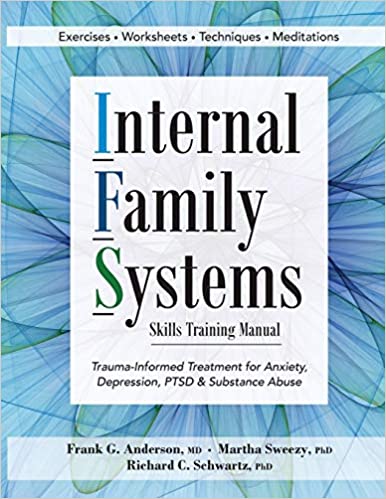
Now that I've finished the text one time through, I have slowly started to work through the corresponding workbook, Internal Families Systems Skills Training Manual as I read the original text a second time through.


Who can benefit from IFS?


IFS was can and has been used in a variety of cases ranging from trauma to addictions, to personality disorders.

As much as some of my parts continue to try to convince me that I am wrong, bad, and not okay, my therapist, and many before her, have stated that I don't suffer from an anxiety disorder, depression, PTSD, ADHD, or anything else. 

My anxiety is not severe or inhibiting.

I am not a depressed person.

Yes, I have experienced trauma, but it can't be considered POST traumatic stress disorder, if I'm still going through it, which I am, in regards to Sunshine's situation.

I do not have ADHD, even though my trauma response feels like ADHD on steroids. But unlike ADHD, it comes with a fog that takes over.

I don't have a personality disorder.

I don't suffer from addictions.

Yet, IFS is perfect for me because it helps me work through my body's response to trauma from the past and present, and fears of what may happen in the future.


IFS for Couples


Trauma doesn't just affect individuals in family. It affects the marriage and family dynamics. 

My husband and I have attempted couples therapy for the last three months, without using the IFS model. 

It has not gone well and is extremely triggering. 


Internal Family Systems Couple Therapy


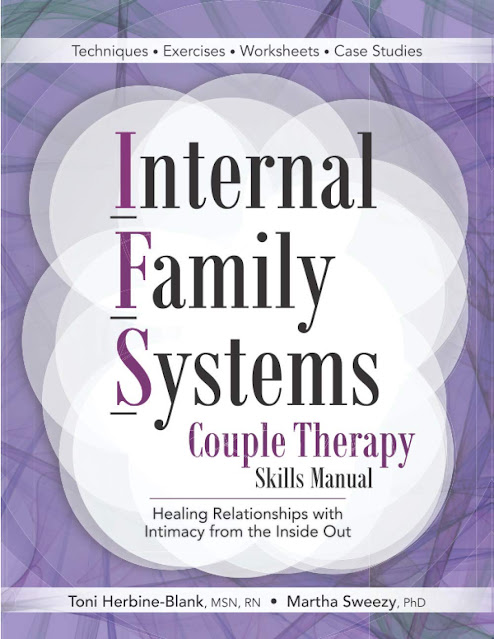
Due to these struggles with traditional couples therapy approaches, and our love of IFS, we've decided to switch modalities and use the Internal Family Systems Couple Therapy Skills Manual.

My therapist, trained in IFS, has agreed to help us with anything we may have questions about.


IFS for Children


One of the greatest benefits of IFS therapy and training has been how I've been able to apply it to situations at home with my kids, especially Princess.

She is very quick to view herself as ALL bad, when in fact, it is only parts of her that feel that way.

Understanding her many parts has been eye opening and empowering for her.

When it comes to tense situations between us, instead of conversations becoming heated, all I have to do is ask Princess, what part is in charge right now, and she calms right down. 

The part is then free to express feelings without judgement, and we work to help her part(s) feel safe.

Princess has gone as far as drawing images of her parts, what they look like, and how they work.

She absolutely loves this modality. Unlike others we've tried, this one is actually working.


Internal Family Systems Therapy for Children


I am super excited to start using the Internal Family Systems Therapy with Children book to help guide Princess' progress.

IFS has not been offered at any of Sunshine's residential placements, but if it was, I believe it would also help her.


Try It!


My husband was laughing at me today as I expressed my love for IFS. He knows more than anyone how much I dislike mental health therapy, especially many of the traditional modalities. 

He worked as a mental health therapist and has tried for years to persuade me of the benefits of mental health therapy, despite what I've experienced in the past, and what our family has endured over the years.

Today he declared victory, even though I told him, I was only in support of IFS. 

If you're struggling with traditional mental health therapy and feel it's not working, research local IFS trained therapists in your area and try it. 

IFS is a complicated approach, so I can't emphasize enough how important is to work with a therapist  who has training and experience with it. 

It may just change your life for the better!

To receive more mental health resources and support from us, be sure to subscribe to our FREE newsletter.


Click HERE to Subscribe to our FREE Newsletter


If you enjoyed this post, you may also enjoy the resources below.

  The Realities of Reactive Attachment Disorder and Mental Health Therapy Internal Family Systems: A Child's Parts Reactive Attachment Disorder Fits: Did I Do Something Wrong? To Be a Mother of a Young Child with Reactive Attachment Disorder Our Pediatric Mental Health Crisis My Child Wants to Kill Herself, Now What? Why Self-Care is So Dang Hard for Parents Raising Kids with Trauma Holidays and PTSD:  A Parent's Guide to Survival

Read More »

Reactive Attachment Disorder and Food Struggles

 “We need to talk about Sunshine’s eating habits. She’s refusing multiple meals a day.”

The clinical director of Sunshine’s RTC continued explaining everything that had been tried.

This is the third RTC that Sunshine has been placed in due to behaviors related to Reactive Attachment Disorder, and other emotional and developmental disabilities.

They had given Sunshine food choices at this RTC.

They had offered to have her help prep her meals.

They made her favorite foods.

Still the problem was worsening.

A list was read out loud of all the food that Sunshine had refused over the past two weeks. It included hamburgers, French fries, and potato chips, all of which are her favorites.

No information that the clinical director shared was new.

This is what life has always been like with Sunshine due to Reactive Attachment Disorder and Food Struggles.


Reactive Attachment Disorder and Food Struggles


Reactive Attachment  Disorder and Food Struggles


The History


Sunshine has a LONG history with food, and it’s not a good one.

Throughout the years we’ve dealt with food refusal, food gorging, vomiting, gagging, stealing food, and so much more.

This is all completely normal with a child who has Reactive Attachment Disorder.

This has been on top of reflux, food allergies, and other special dietary needs.

Sunshine has had a barium study. She’s been to a swallowing specialist. An OT has worked with her.

We have tried so many different methods to empower Sunshine at mealtime. 


  • Use a Montessori weaning table
  • Teach practical life skills related to food preparation
  • Let Sunshine prepare her own food to the ability that she’s able
  • Let Sunshine meal plan
  • Take Sunshine grocery shopping to ensure we have foods that she loves
  • Provide choices to choose from
  • Improve sensory experiences related to food

Still, Sunshine refused to eat on a regular basis.

Mealtime became a battle ground.

Often the issues started even before a meal was prepared, especially at dinner time. If Sunshine didn’t like what we were having all sorts of behaviors would start.

The screaming would come first, then would come the physical aggression.

When my husband wasn’t home, I’d always need to make sure the refrigerator was stocked full of grab and go foods for my other children to prepare on their own. Sunshine’s outbursts and aggressions could last hours, to the point that I could not prepare a meal.


The Doctor's Orders


I spoke with Sunshine’s developmental pediatrician about these struggles early on. 

As a mother, I felt like the most horrible person on earth. 

Nothing I tried would help with the mealtime drama, which was affecting Sunshine’s health.

The developmental pediatrician was kind yet blunt.

If she was refusing to eat, then I needed to do what was necessary to make sure she ate. 

If that included a stand off until she conceded, then that’s what needed to happen.

If she would not feed herself, then I was to feed her.

Refusing to eat was not an option.

So that’s what we did.


The Nightmare


We continued to do all the things mentioned above AND…

At each meal, I set the rule that Sunshine had to eat however many bites of food she was in years of age. When Sunshine was five years old, she needed to take five bites.

If she decided to refuse and throw a fit, I’d wait until the fit was over, and we’d start again.

If Sunshine decided to spit her food out, the count started over.

If Sunshine became aggressive, I’d wait it out and we’d go at it again.

It was a nightmare.

I felt like a monster.

This was not the mother I wanted to be.

But, year after year, this proved to be the only way to ensure that Sunshine would eat.

You see, Sunshine has absolutely no concept of when she’s full or hungry. This dates back to trauma she experienced during the first six months of her life (before she came to us).

Food trauma is real.


Validation


As I shared with the clinical director what had worked at home all those years, frightened out of my mind to be judged as being that parent, the clinical director surprised me.

“Okay. We’ll do it.”

I was speechless.

“Are you sure? It’s going to result in so many more aggressions.”

She was sure.

Sunshine’s refusal to eat has become that dangerous.

Part of me was frustrated.

After six months of working with professionals, my advice is the best idea they have.

Yet, if my advice is the best option they have, that means that no matter how horrible it felt forcing Sunshine to eat all of those years, it was the right thing to do.

If Sunshine is refusing to eat even more there than she was at home, that meant that the whole mess wasn’t my fault.

I’m not really great at accepting that things aren’t my fault.

I do not have confidence in my parenting abilities after how horrible experiences have felt.

So for good measure I reminded the clinical director of a few other things.

  • Sunshine’s GABA supplement should not be taken with food, or else it causes her tummy to be upset.
  • A side effect of one of Sunshine’s meds is constipation. If she’s constipated, she’s not going to eat much.
  • Sunshine had COVID-19 a month ago and it may have changed her taste buds.

But ultimately, all of us agreed that it seems all of this comes down to control.

Reactive Attachment Disorder goes far beyond the challenges of parenting a picky eater or one with sensory struggles.

Why I Share


I’m sharing this experience because I know there are other caregivers out there struggling with food issues related to Reactive Attachment Disorder. They are real. You are not alone.

Documentation is so important in these cases.

Keep a food journal.

Write down behaviors.

Try everything and anything that professionals suggest. 

Document if it works and the consistency in which it works.

Talk to your child’s pediatrician and other specialists.

You need a team.

You need support.

Battles as severe as Sunshine’s regarding food are not normal. Seek help.

You are not a bad caregiver for doing so.

This is not your fault.

For those looking for more support and resources related to Reactive Attachment Disorder be sure to subscribe to our FREE newsletter.


If you enjoyed this post, you may enjoy the resources below.

What Is Reactive Attachment Disorder A Minimalist Montessori Home Tour: The Kitchen How to Discipline a Child with Reactive Attachment Disorder Food Issues When Food is Your Child's Enemy Day to Day Life Parenting A Child with Reactive Attachment Disorder
Read More »

Valentine's Day Noun Activities for Preschoolers with Free Printables

 I am so excited about these new Montessori-inspired Valentine's Day Noun Activities for Preschoolers. They even come with a new free printable.

It's my plan to bring them along with us to Sunshine's next visit for her to enjoy during learning time. (We try to keep our daily schedule as close to home as possible when we visit to practice each and every part of the day.)

Sunshine absolutely loves holidays. When I combine holidays with learning, she's sure to enjoy herself and learn so much more. It also helps that there are a lot of hands on activities, which always keeps her busy.


Montessori-inspired Valentine's Day Noun Activities for Preschoolers with Free Printables

In the Montessori albums, nouns are introduced in the elementary classroom.

I'm here to say, it's perfectly okay and sometimes highly encouraged to introduce noun concepts in the Montessori preschool classrooms.

I create noun activities for preschool children, for this very reason.

The goal is to follow the child. 

If a student is showing signs of interest in learning about grammar early, go for it!

As a preschooler, Bulldozer LOVED shapes and colors. He was drawn to the Montessori Grammar Symbols because of this. Though he couldn't read or write at the time, he learned about grammar, because he loved it so much.

We continued with grammar lessons in elementary when he was ready for the next level, but so much of his knowledge is based on all of those preschool lessons and activities.

Today I'm excited to show you four activities that may work for Montessori preschoolers in your life!


Valentine's Day Noun Activities for Preschoolers


N is for Noun


N is for Noun

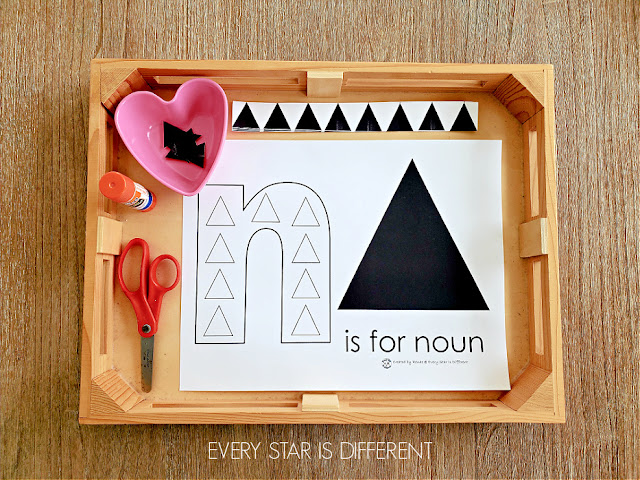
Grammar lessons can be combined with so many other learning concepts. Here I've created a first letter sound "do-a-dot" page that focuses on the Montessori Grammar Symbol for nouns. This activity can also include cutting and gluing.


Sunshine will cut the triangles and glue them onto the letter n, in each of the triangles there. 


As she works, and once finished, we will review that a black pyramid/triangle stands for a noun, which is a person, place, thing, or idea in a sentence.


Source: I created this printable as part of Valentine's Day Nouns Printable Pack.


Valentine's Day Nouns: People, Places & Things


Valentine's Day Nouns: People, Places & Things

In this activity Sunshine will learn and understand that a noun is a person, place, or thing. I've included the Montessori Grammar Symbol for nouns on the tray as a visual to remember what a noun is.


We will go through the pictures together to identify what each one is. Once she feels confident knowing the name for each image, she will sort them under the "people," "places," and "things" cards provided.


I absolutely love this activity and the cards included. There are so many fabulous people to discuss when it comes to Valentine's Day including a chocolatier, jeweler, and baker. The "places" and "things" cards are great as well.


Source: I created this printable as part of Valentine's Day Nouns Printable Pack.

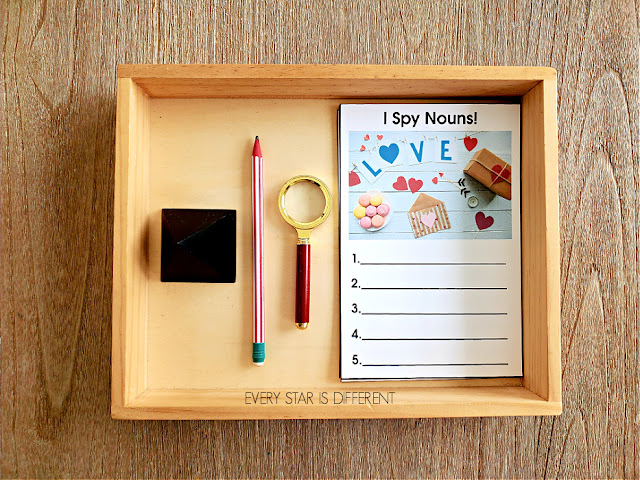
I Spy Nouns!


I Spy Nouns!


Once the realization comes that nouns are people, places and things, it can be quite fun to play "I Spy" with nouns. How many nouns can you find?

In this activity Sunshine will use her favorite magnifying glass to look for nouns in the picture cards provided. She will be working with a parent or sibling, so she can share her nouns verbally.

If she's up for it, I'm going to invite her to use the "big kid" version of this activity where she is able to write what she finds on the lines provided.

I Spy Nouns! Writing Activity

This is not a spelling activity, so she can do her best to write words without worrying if they're spelled wrong. If she wants help spelling, she can always ask for it.


You'll notice I also included a noun pyramid in this activity to reinforce the Montessori Grammar Symbol.


Source: I created this printable as part of Valentine's Day Nouns Printable Pack.

Valentine's Day Nouns


Valentine's Day Nouns

This is a super fun activity to reinforce that nouns are things. Sunshine will match up the objects with the free noun word strips provided.

What I love about this activity is that all of the noun word strips have to do with objects you may see at a Valentine's Day Party. All objects are $1 or less, found at Walmart or our local dollar store.


For those interested in receiving more Valentine's Day and Montessori grammar activity ideas and resources for preschoolers and elementary students, be sure to subscribe to our FREE newsletter.


If you enjoyed this post, you may also enjoy the following resources.


Valentine's Day Singular and Plural Nouns Writing Strips Valentine's Day Practical Life and Sensorial Activities Montessori-inspired Pink Activities Montessori-inspired Red Activities Valentine's Day in Paris Valentine's Day Activities for Tots 
Read More »

FREE Valentine's Day Singular and Plural Nouns Writing Strips

Valentine's Day is such a great holiday for studying language concepts including grammar. Nouns are especially fun to learn about. There are some fantastic Valentine's Day related nouns!

Everyone learns differently. 

Some enjoy pictures. 

Others enjoy reading. 

Then there are those who learn through writing.

I have two girls who absolutely love writing. 

It's for these reasons that I've created the FREE Valentine's Day Singular and Plural Nouns Writing Strips.

Valentine's Day Singular and Plural Nouns Writing Strips

Three writing strips are included for every singular and plural noun match up:
  • Singular Noun Writing Strip
  • Plural Noun Writing Strip
  • Fill-in-the Blank Plural Noun Writing Strip

How to Use the FREE Valentine's Day Singular and Plural Nouns Writing Strips


There are multiple ways that these writing strips can be used.

1. A student may choose to match up the singular and plural writing strips. If you have a student with a vision impairment, these writing strips may be a better option than traditional nomenclature sized matching cards.

2. A student may be presented with singular noun writing strips and blank plural noun writing strips with the expectation of writing the plural version of the noun.  Answers can be checked using the plural nouns writing strips.

3. A student may be presented with only blank plural noun writing strips and asked to write the plural noun that matches the picture. Answers can be checked using the plural noun writing strips.


To obtain your free Valentine's Day Singular and Plural Nouns Writing Strips, click on the link at the bottom of this post.

Valentine's Day Grammar: Nouns Printable Pack

Valentine's Day Grammar: Nouns Printable Pack


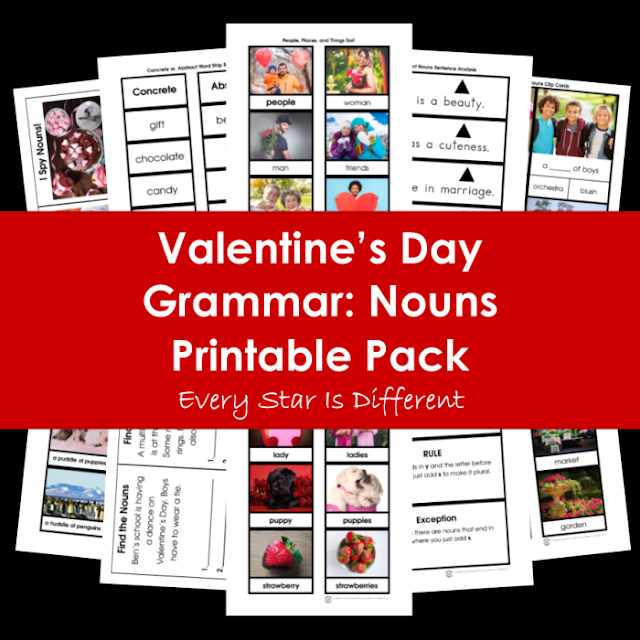
The FREE Valentine's Day Singular and Plural Nouns Writing Strips are designed to be used with the Valentine's Day Grammar: Nouns Printable Pack.

They match the singular vs. plural noun nomenclature cards included in the printable pack.

This is such a fabulous language resource that can provide years of study for homeschoolers and such a variety of grammar activities on the shelves in Montessori classrooms! 

We hope you enjoy it as much as we do!


For those looking for more Valentine's Day and Montessori grammar resources, be sure to subscribe to our FREE newsletter where you will receive updates about our most recent activities and free printables.


If you enjoyed this post, you may also enjoy the resources below.

Valentine's Day Practical Life and Sensorial Activities Montessori-inspired Pink Activities Montessori-inspired Red Activities Valentine's Day in Paris Valentine's Day Activities for Tots Valentine's Day

Read More »